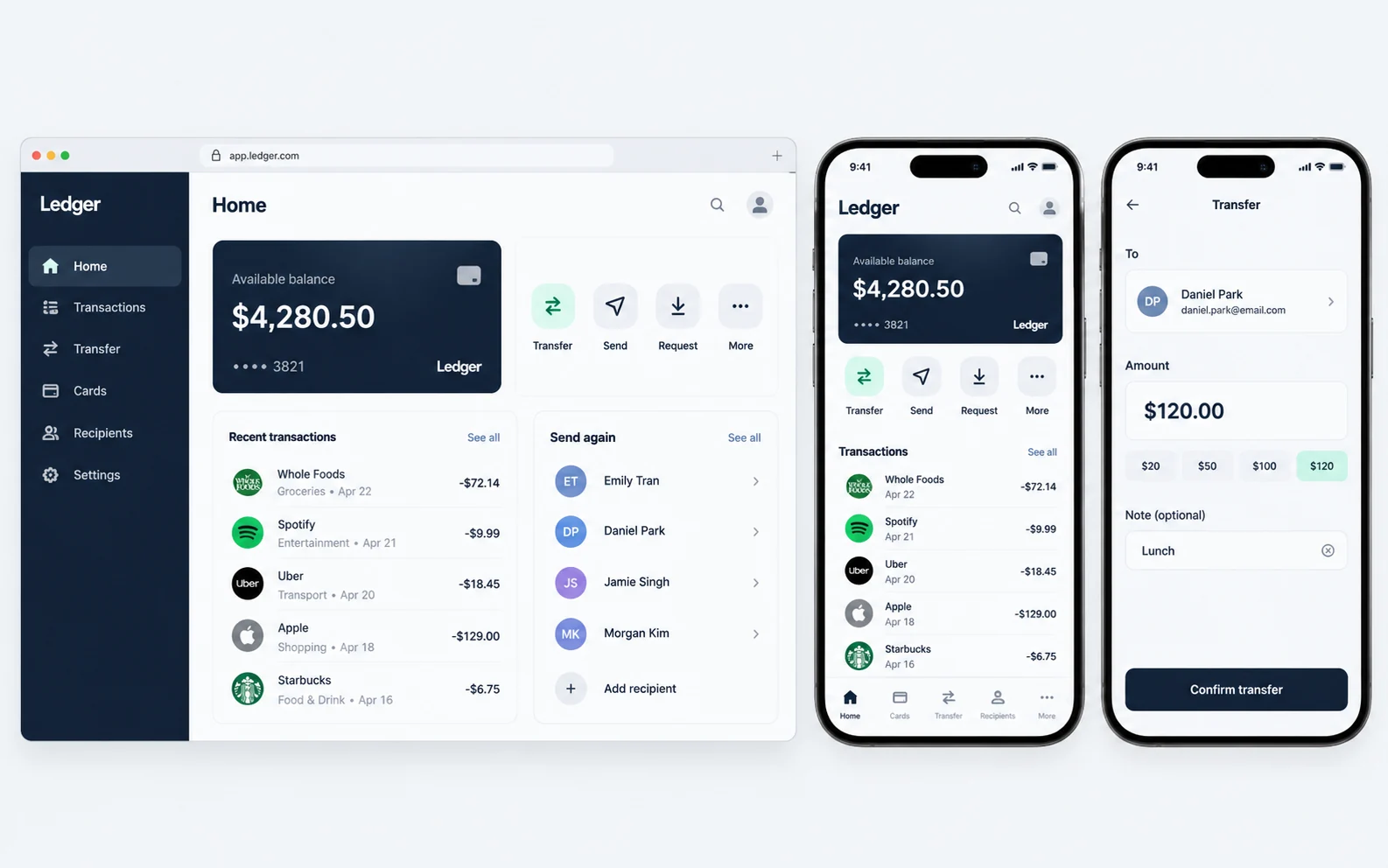
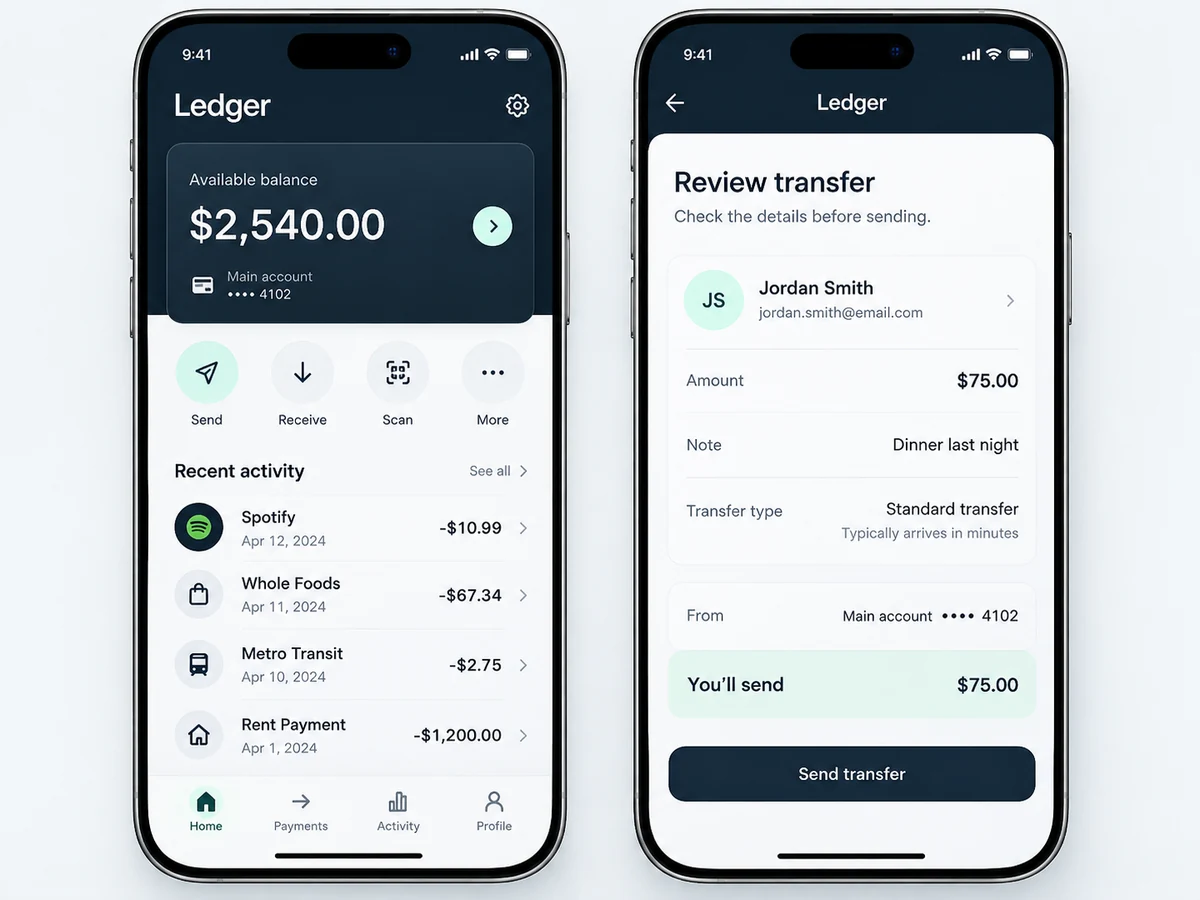
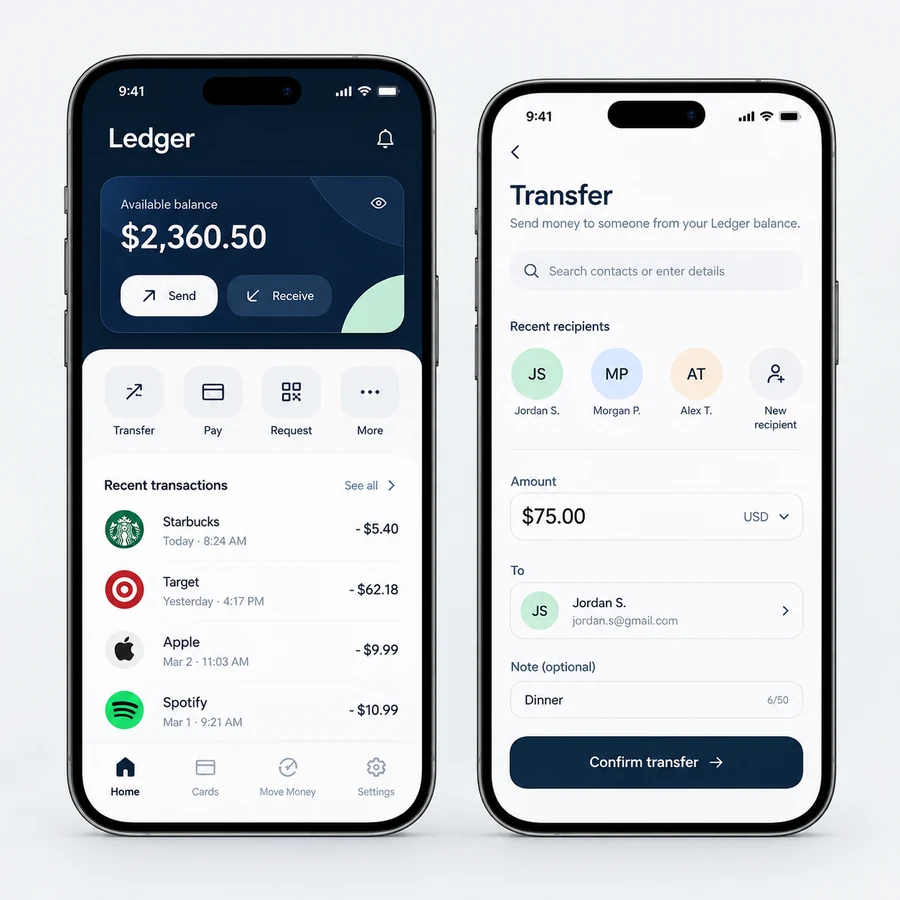
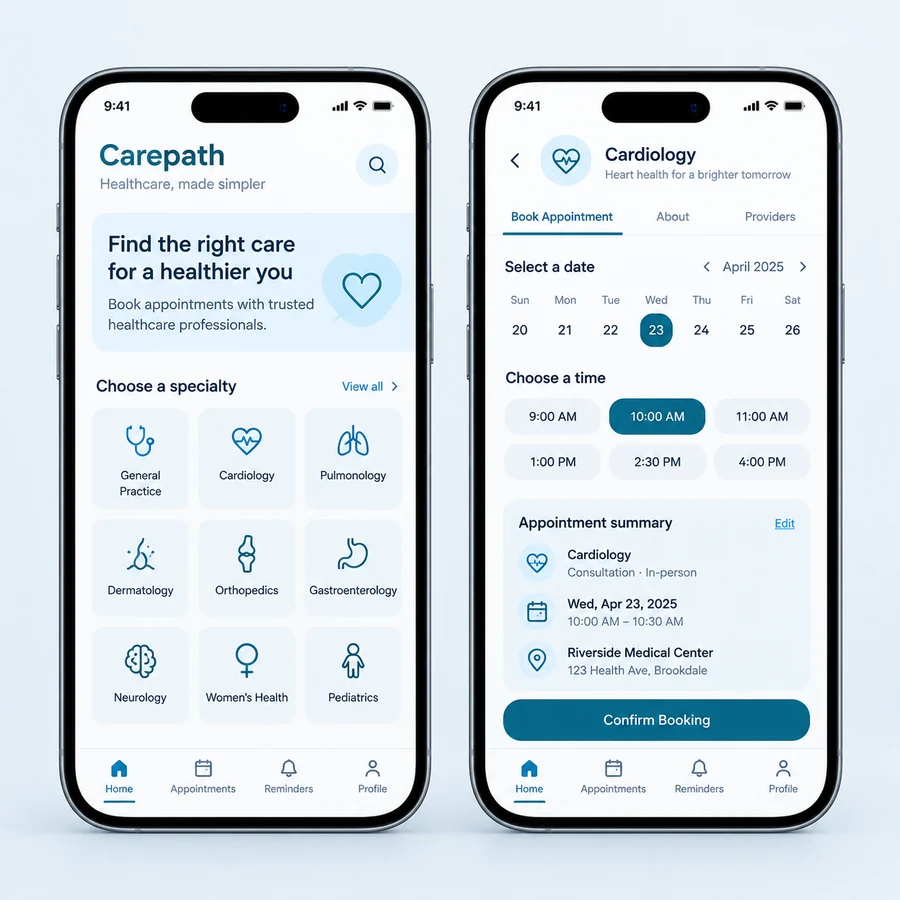
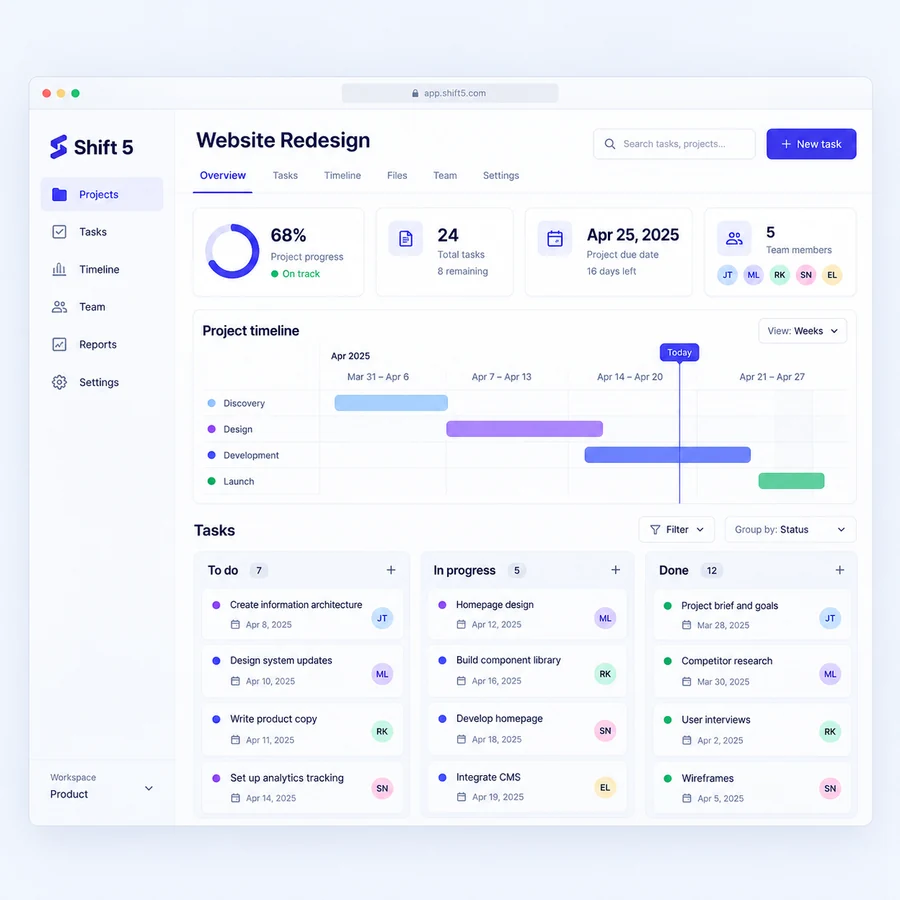
A digital wallet interface concept with readable account activity and deliberate transfer review.
The productFinance mobile interface
The focusTransaction clarity
Our contributionProduct direction & interface design
The contextOriginal studio concept
Illustrative product interfaces and sample data. Original studio design study, without claimed client outcomes.
The brief
A product with a clear purpose.
Ledger is a digital wallet interface study centered on readable account context and deliberate action review. Navy, cool white, and mint accents distinguish supporting information from controls. The screens use illustrative account data to explore hierarchy, transaction states, and transfer confirmation; they do not represent a live financial service.
Who it is for
People checking account activity and reviewing a transfer in a mobile finance interface.
The challenge
A balance display can be visually prominent while hiding pending activity or the conditions of an action. Ledger separates available information, activity history, and confirmation so a person can understand what they are viewing and what they are about to do. Financial product requirements would need their own specialist review before production.
Distinguish balances from pending activity.
Make transaction status explicit.
Keep recipient and amount visible at review.
Design a clear recovery path for failed actions.
The experience
Useful choices. A coherent interface.
A closer look at the interface direction.
01
A readable account overview
The account screen separates available balance, recent activity, and pending entries. Information is grouped by purpose and avoids using color as the only indicator of state. Example amounts are interface content rather than claimed financial results.
02
Deliberate transfer review
The transfer sequence asks for a recipient and amount before presenting a review step. The confirmation screen repeats the meaningful details and identifies which action commits the request.
03
Transaction states with context
Requested, processing, completed, and failed states use distinct language. Each state explains the next available step and retains the relevant record context instead of replacing it with a generic success animation.
The user journey
From context to the next action.
Step 1
Understand the account
The user checks recent activity and the meaning of the displayed balance before selecting a task.
Step 2
Prepare and review
Recipient and amount choices remain visible as the person reviews the request. Validation should identify the specific field or condition that needs attention.
Step 3
Follow the result
The activity record shows the resulting state and the appropriate support or retry path. Confirmation does not imply settlement unless the underlying service supports that status.
Delivery thinking
The decisions behind the screens.
Proposed implementation direction
A production financial system would require scoped account, authentication, authorization, transaction, and compliance responsibilities.
The visual concept proposes interfaces and feedback, not a payment infrastructure or regulatory approval.
API contracts should distinguish requested actions from confirmed results and define timeout, duplicate-request, and failure behavior.
A focused first scope
Account and activity screens
Transfer preparation and review
Transaction state patterns
Responsive and accessibility direction
What to validate
Questions a working product must answer.
This study establishes a reviewable design direction. A production project would test the selected journey with representative users, realistic data, and agreed acceptance criteria. These questions define the next review without implying results have already been measured.
01Can users distinguish pending activity from completed records?
02Is the committing action unmistakable?
03Do failure states explain a useful next step without implying success?
Have a similar product in mind?
Share your audience, the task you want to improve, and the constraints that matter. We can discuss a scope built around your own context.