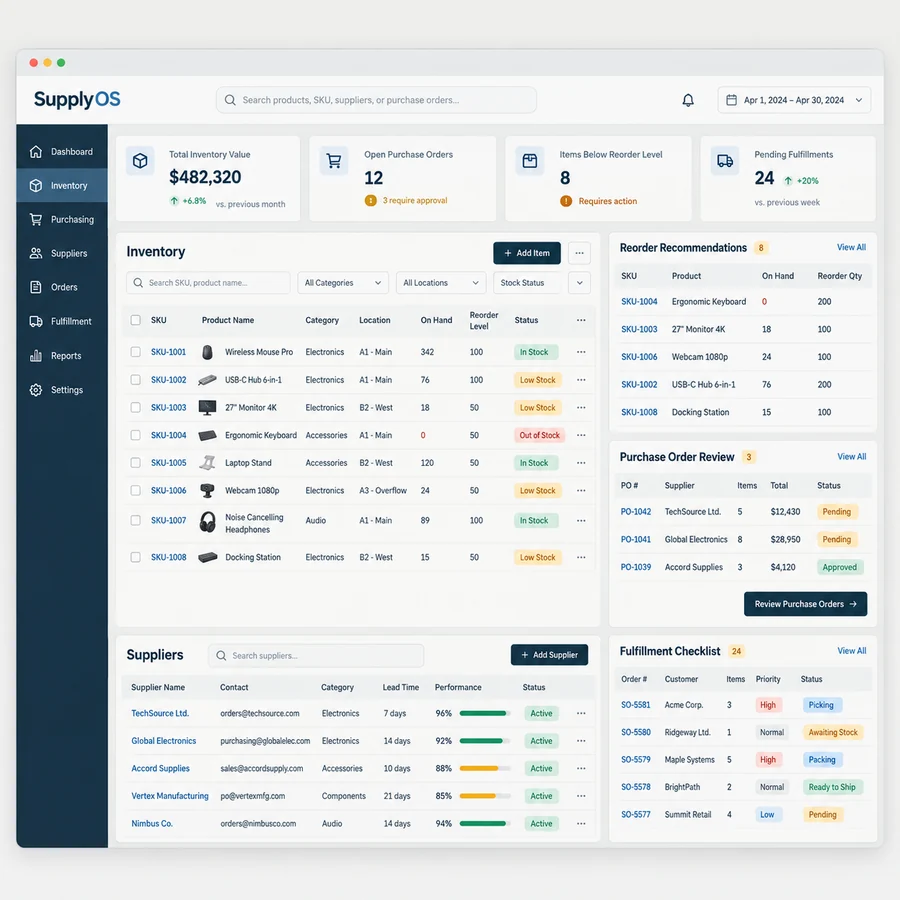
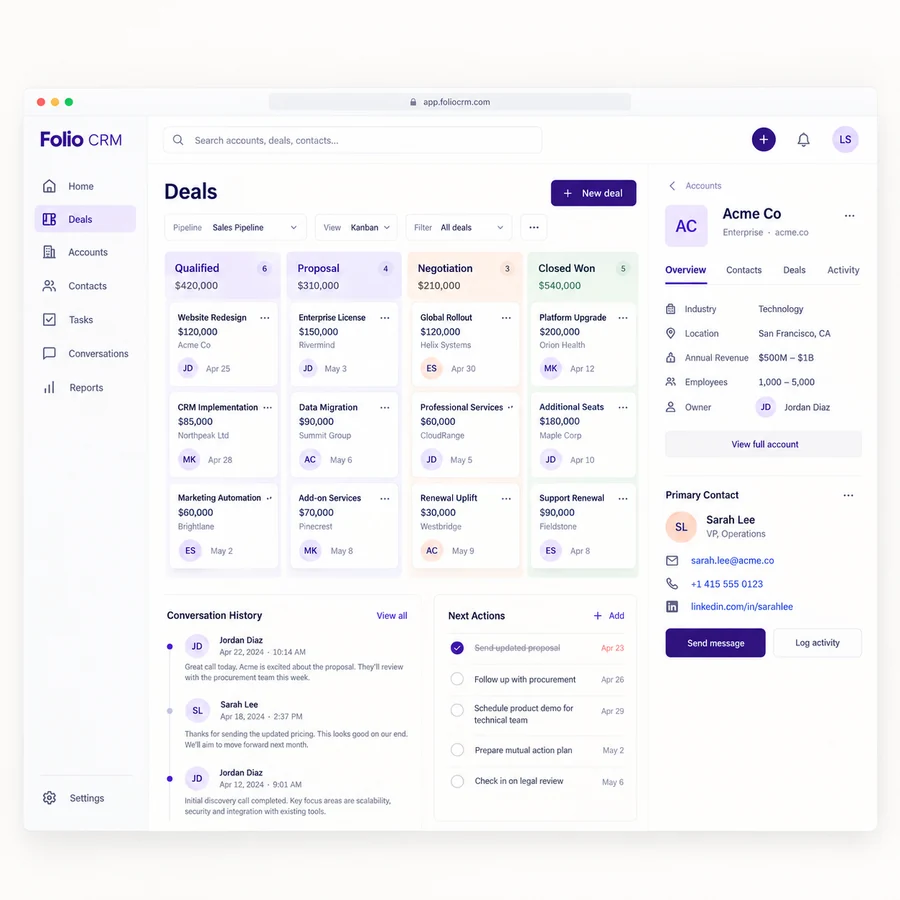
A project management design study connecting tasks, timelines, and ownership in a focused SaaS workspace.
The productSaaS web application
The focusProject coordination
Our contributionProduct direction & interface design
The contextOriginal studio concept
Illustrative product interfaces and sample data. Original studio design study, without claimed client outcomes.
The brief
A product with a clear purpose.
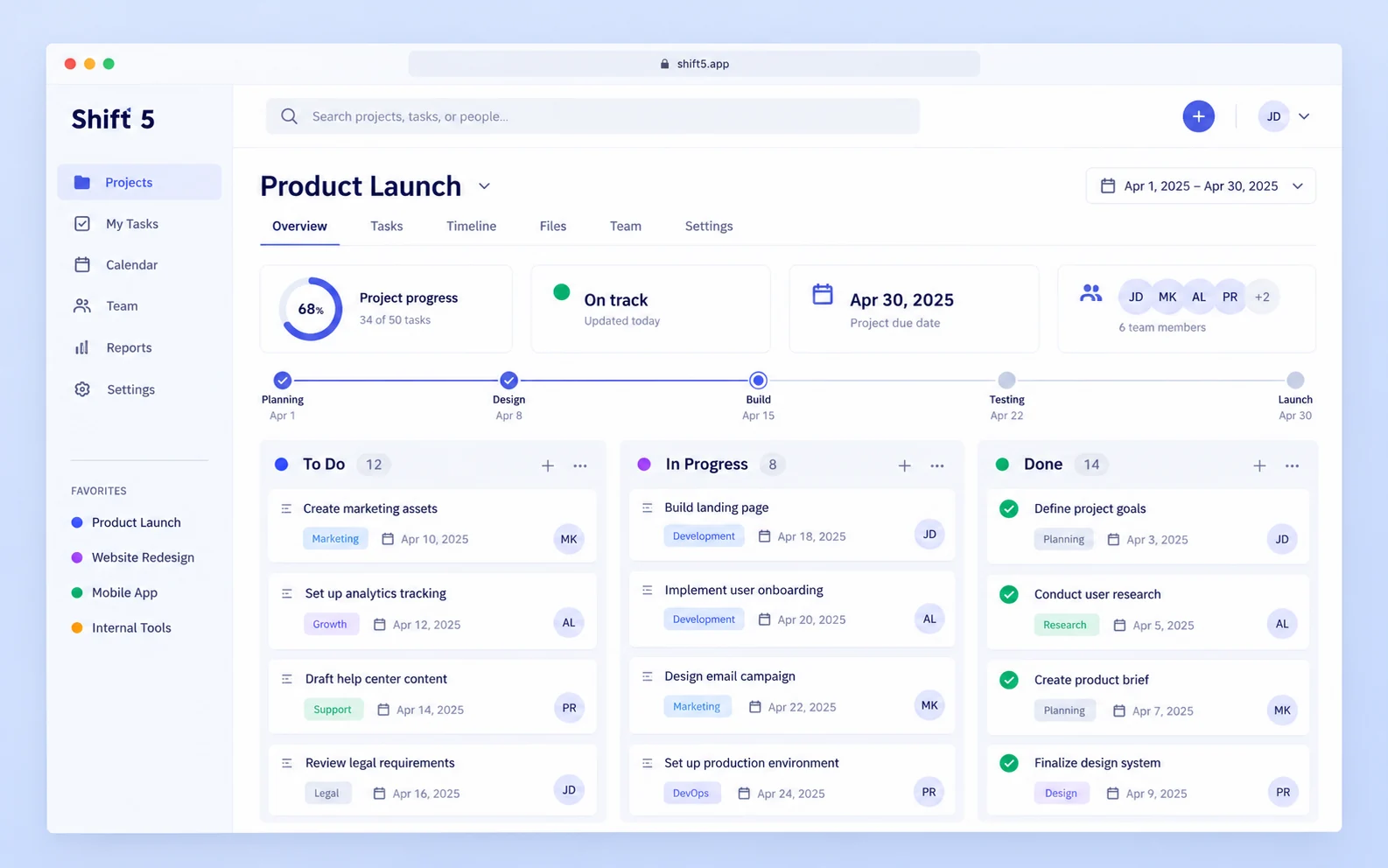
Shift 5 explores a practical SaaS workspace for teams coordinating projects across disciplines. The interface brings the project’s goal, current tasks, owners, and dependencies into the same working context. The design uses a restrained indigo palette and a stable navigation structure so teams can focus on decisions rather than repeatedly rebuilding a view of the work.
Who it is for
Project leads, contributors, and operations teams who need a shared view without turning every update into a meeting.
The challenge
Project information often lives across messages, spreadsheets, and separate task lists. A person can see that a task exists without understanding why it matters, who owns the next action, or what is blocking it. This study examines how a project management application can make those connections visible while keeping the everyday interface manageable.
Give every task an owner and understandable status.
Keep dependencies close to the task they affect.
Separate personal priorities from the overall project view.
Make a handover understandable to the next contributor.
The experience
Useful choices. A coherent interface.
A closer look at the interface direction.
01
One focused workspace
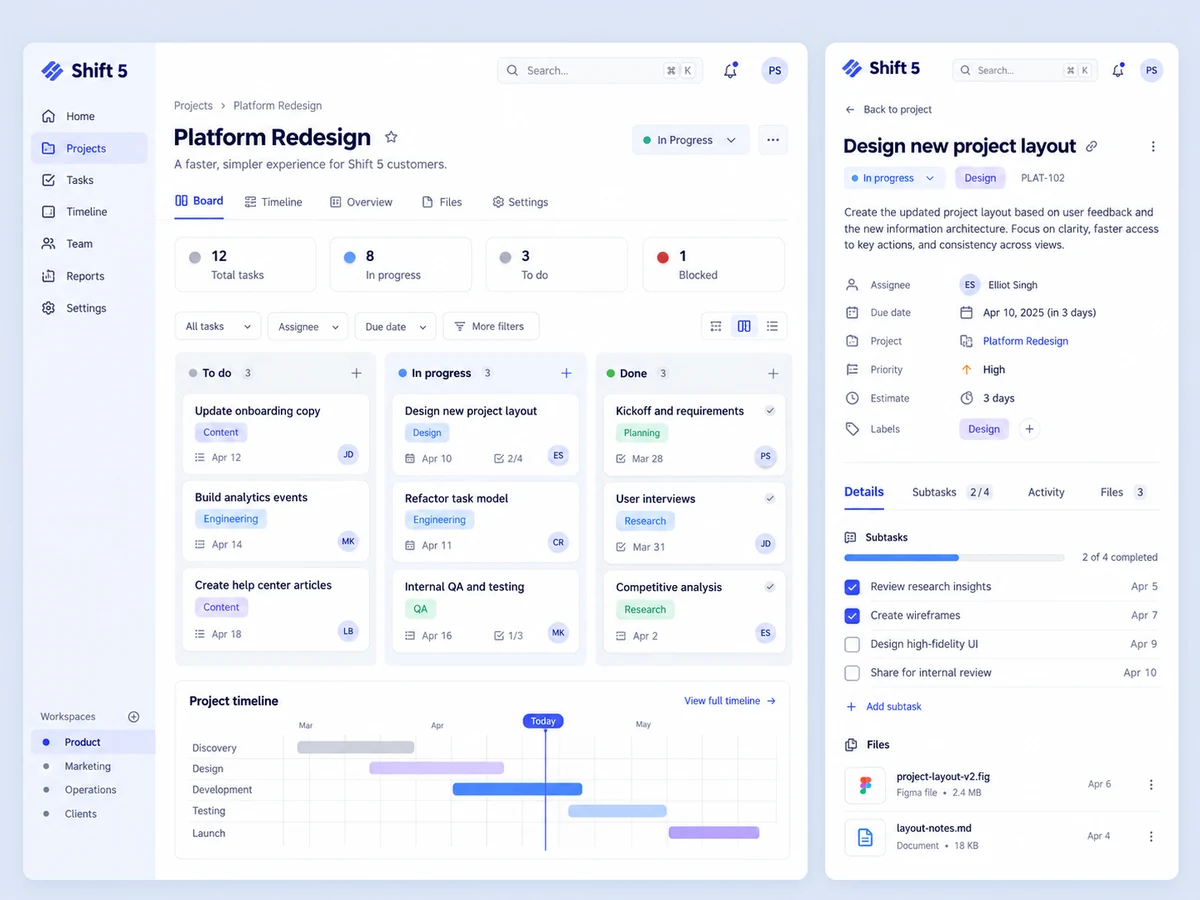
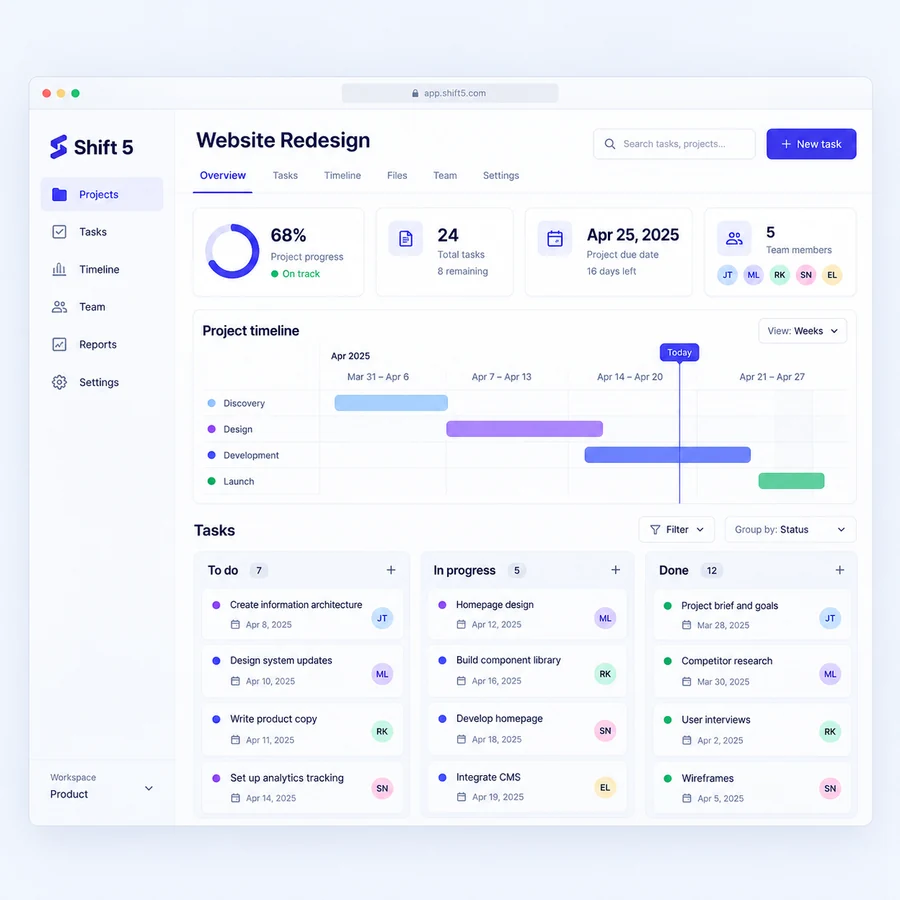
A project overview combines current work, upcoming decisions, and blocked items. The hierarchy gives exceptions a clear place without turning every record into an alert. Filters retain their meaning as a person moves from an overview into a task.
02
Task context that travels with the work
A task detail view keeps the brief, due date, linked work, and discussion together. Contributors can review what changed and identify the next action without searching a separate conversation. Assignment and status changes have explicit confirmation.
03
A useful timeline
The timeline represents sequence and dependencies rather than a decorative chart. A changed date should reveal the affected work and make any unresolved responsibility visible. The proposed view distinguishes planned dates from completed activity.
The user journey
From context to the next action.
Step 1
Review the project
A lead opens the workspace and checks priorities, upcoming reviews, and blocked tasks. They can choose a relevant item without leaving its project context.
Step 2
Resolve the next action
The contributor reviews the task’s brief and dependencies, records a decision, and updates its status. Missing information becomes an explicit request rather than an assumed answer.
Step 3
Hand over with context
The next contributor sees the decision history, remaining work, and ownership. A completed task stays connected to the project outcome it supported.
Delivery thinking
The decisions behind the screens.
Proposed implementation direction
A proposed implementation would define organization, project, task, membership, and activity records with explicit role permissions.
Updates need consistent status rules, notifications, and conflict handling when multiple people edit the same task.
The first scope would favor a stable web application and clear integration boundaries over an extensive collection of disconnected features.
A focused first scope
Project overview and task board
Task detail and activity history
Ownership and dependency states
Responsive contributor views
What to validate
Questions a working product must answer.
This study establishes a reviewable design direction. A production project would test the selected journey with representative users, realistic data, and agreed acceptance criteria. These questions define the next review without implying results have already been measured.
01Can a contributor identify their next action without assistance?
02Are dependencies and blocked work understandable with realistic project data?
03Do permissions, empty states, and concurrent updates behave as expected?
Have a similar product in mind?
Share your audience, the task you want to improve, and the constraints that matter. We can discuss a scope built around your own context.