
A pipeline with useful context
Deal cards show the account, owner, stage, and next step. Stage changes should follow agreed rules and retain enough context to explain why the deal moved.


A conversation with a clear next step.
A CRM interface study bringing deals, account context, conversation history, and follow-up into one workspace.
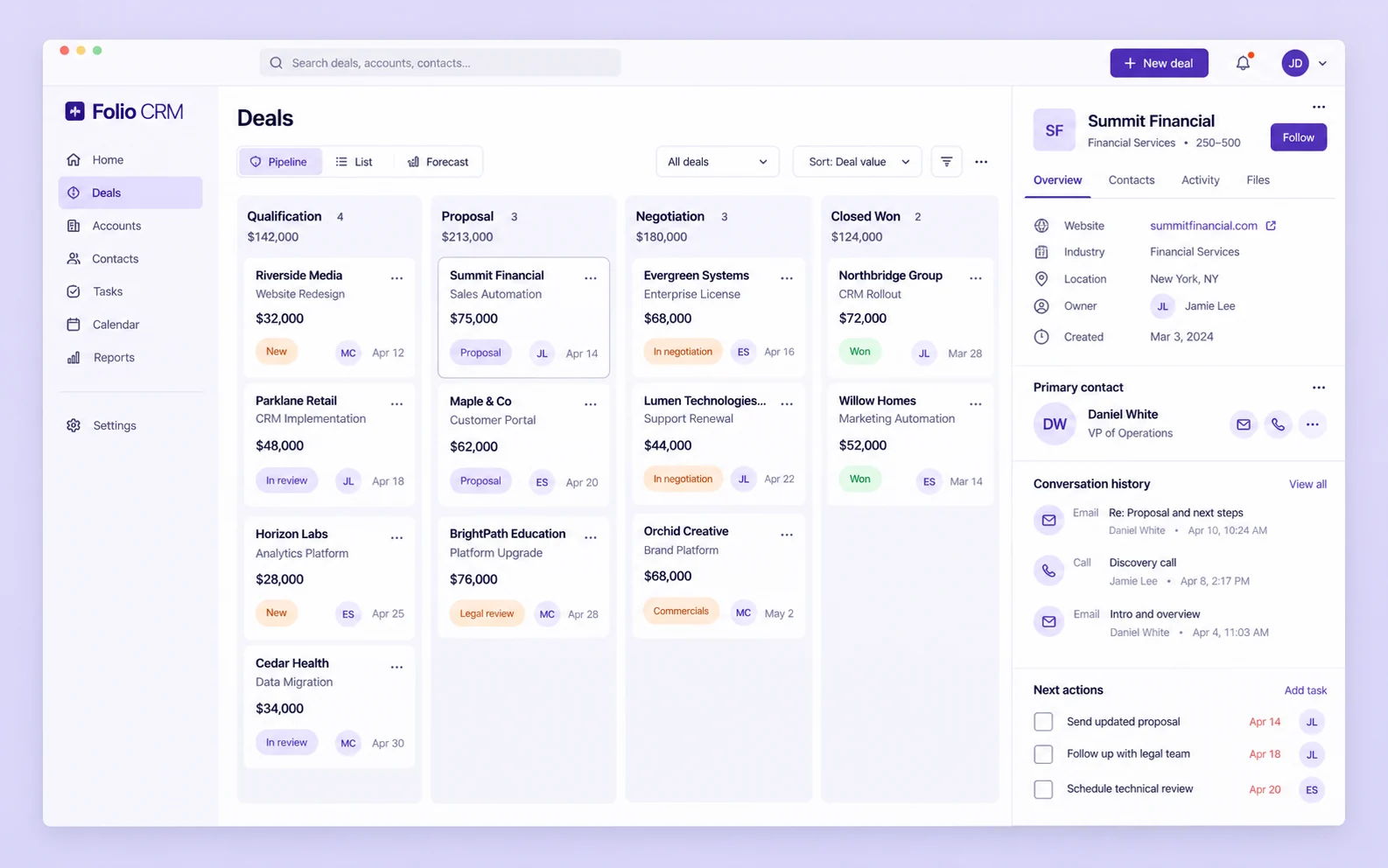
Folio CRM is a sales workspace design study for teams managing account context and follow-up. Lilac, warm white, and deep violet give the interface a distinct but restrained identity. Pipeline cards are connected to account details, conversation history, and a next-action view, so a deal is more than a stage on a board.
Sales representatives, account managers, and team leads coordinating customer conversations.
A deal pipeline can look organized while its supporting conversation and next action remain unclear. Folio CRM explores how contact history, ownership, and follow-up can stay together. The design aims to help staff understand the context of a conversation without depending on a colleague’s memory.
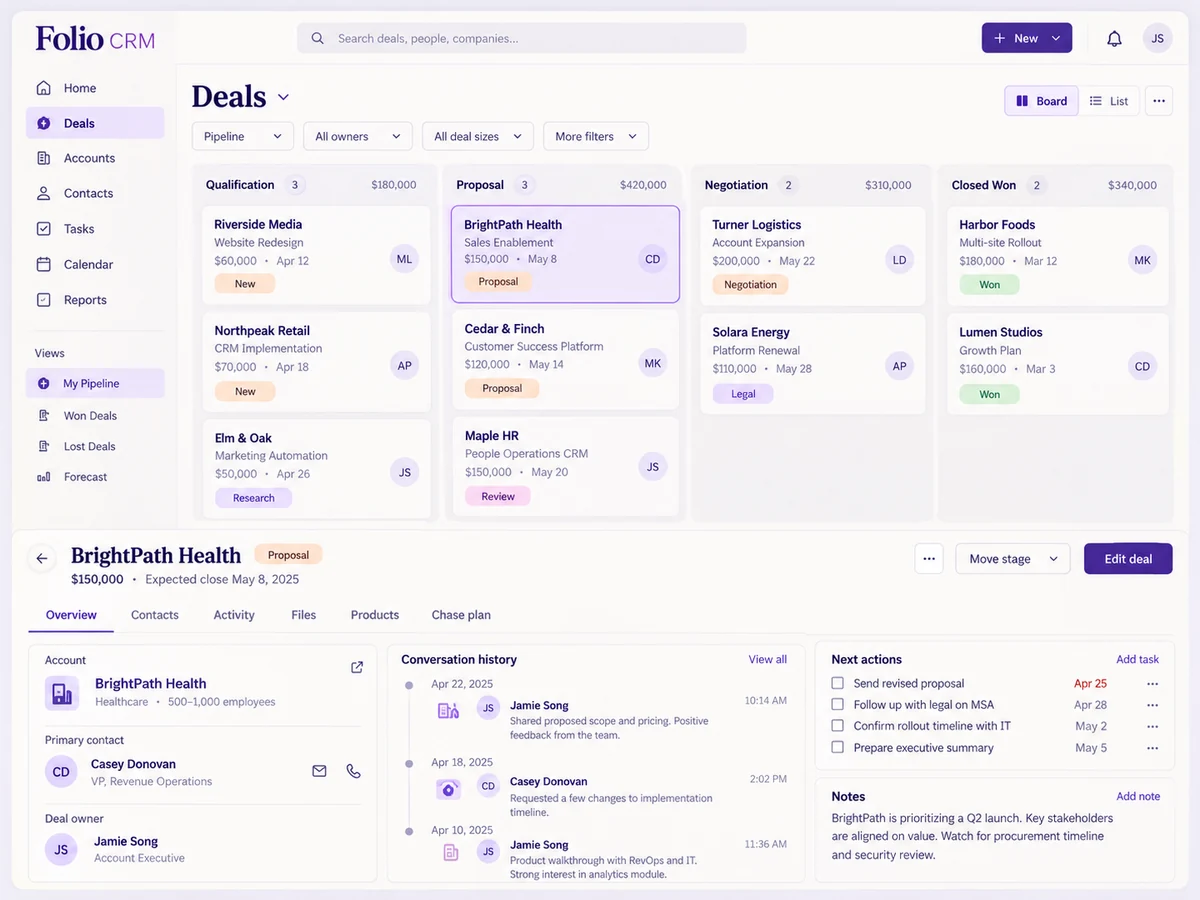
Deal cards show the account, owner, stage, and next step. Stage changes should follow agreed rules and retain enough context to explain why the deal moved.
The account workspace organizes contacts, active deals, notes, and related activity. It distinguishes recorded information from assumptions and keeps important context accessible during follow-up.
The next-action list connects the task to a conversation and an owner. Overdue or incomplete items can be reviewed without implying a sale has been won or a customer contacted.
The representative checks the relevant account and deal context before choosing a follow-up task.
A conversation note is attached to the right record, with an understandable next action and responsibility.
A change of stage or owner retains the supporting context so the next person can continue the work.
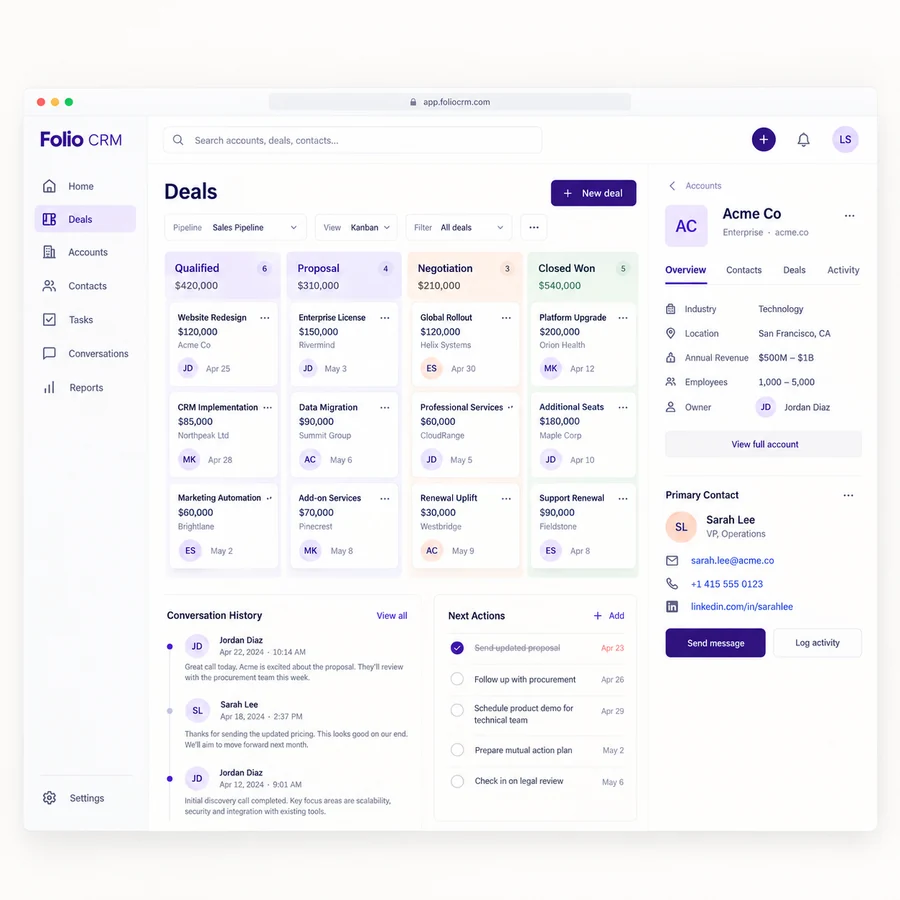
The proposed data model would connect organizations, contacts, deals, activities, and tasks with explicit access rules.
Email, scheduling, and other integrations need clearly defined permissions and synchronization boundaries.
Import, export, duplicate handling, and account ownership should be reviewed with the receiving sales team.
This study establishes a reviewable design direction. A production project would test the selected journey with representative users, realistic data, and agreed acceptance criteria. These questions define the next review without implying results have already been measured.
Share your audience, the task you want to improve, and the constraints that matter. We can discuss a scope built around your own context.
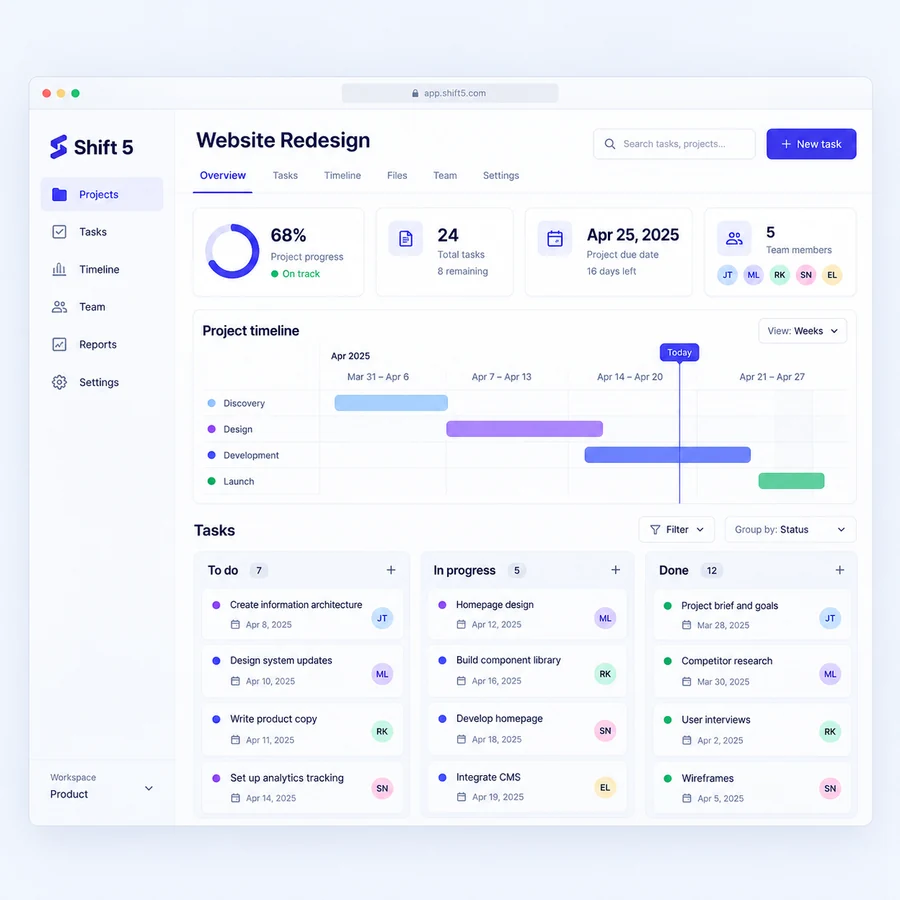
A project management design study connecting tasks, timelines, and ownership in a focused SaaS workspace.
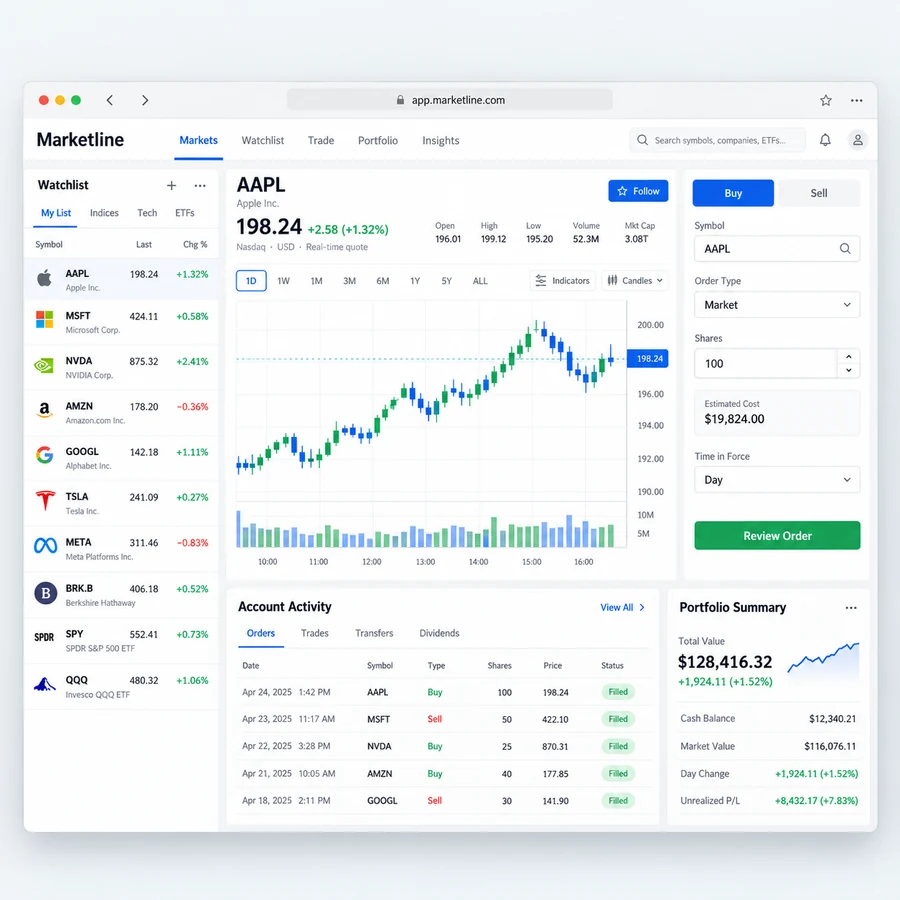
A market analytics interface study separating observed data, order review, and account activity.
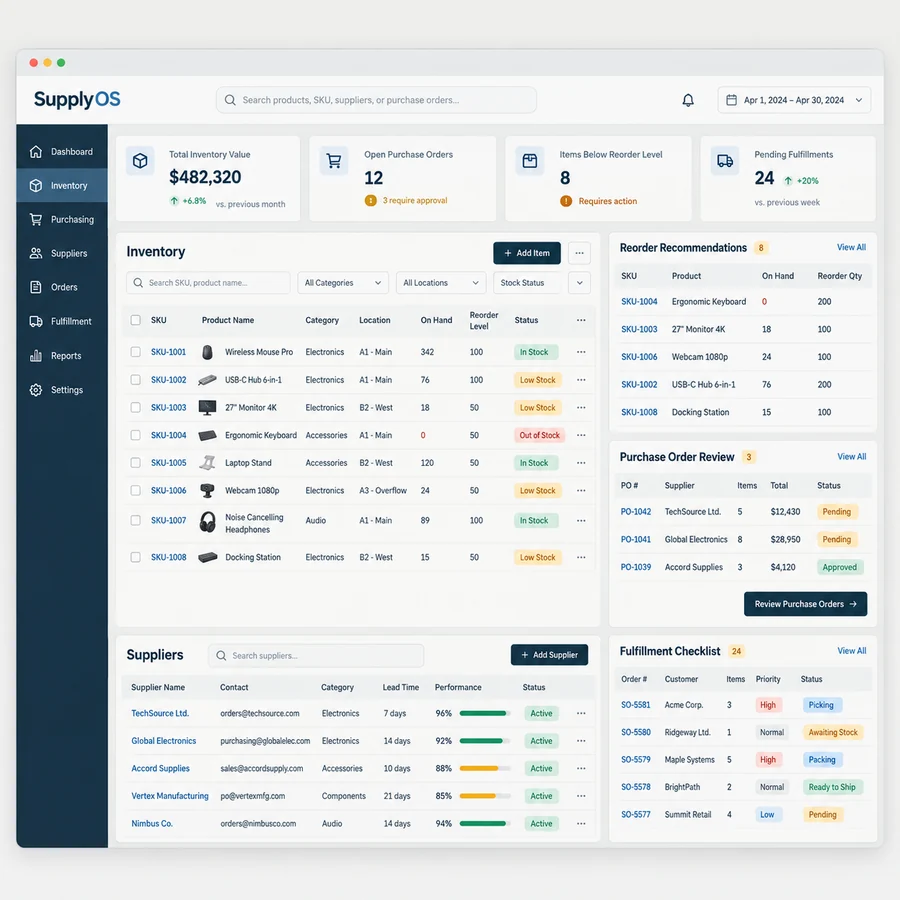
An ERP design concept connecting inventory, replenishment, purchase approvals, and receiving workflows.