
A readable course library
Course cards use concise titles, level or topic context, and a consistent entry point. The layout supports comparison without depending on human portrait thumbnails or overloaded badges.


From the next lesson to useful progress.
A learning management platform design study with a readable course library, lesson workspace, and practical progress feedback.
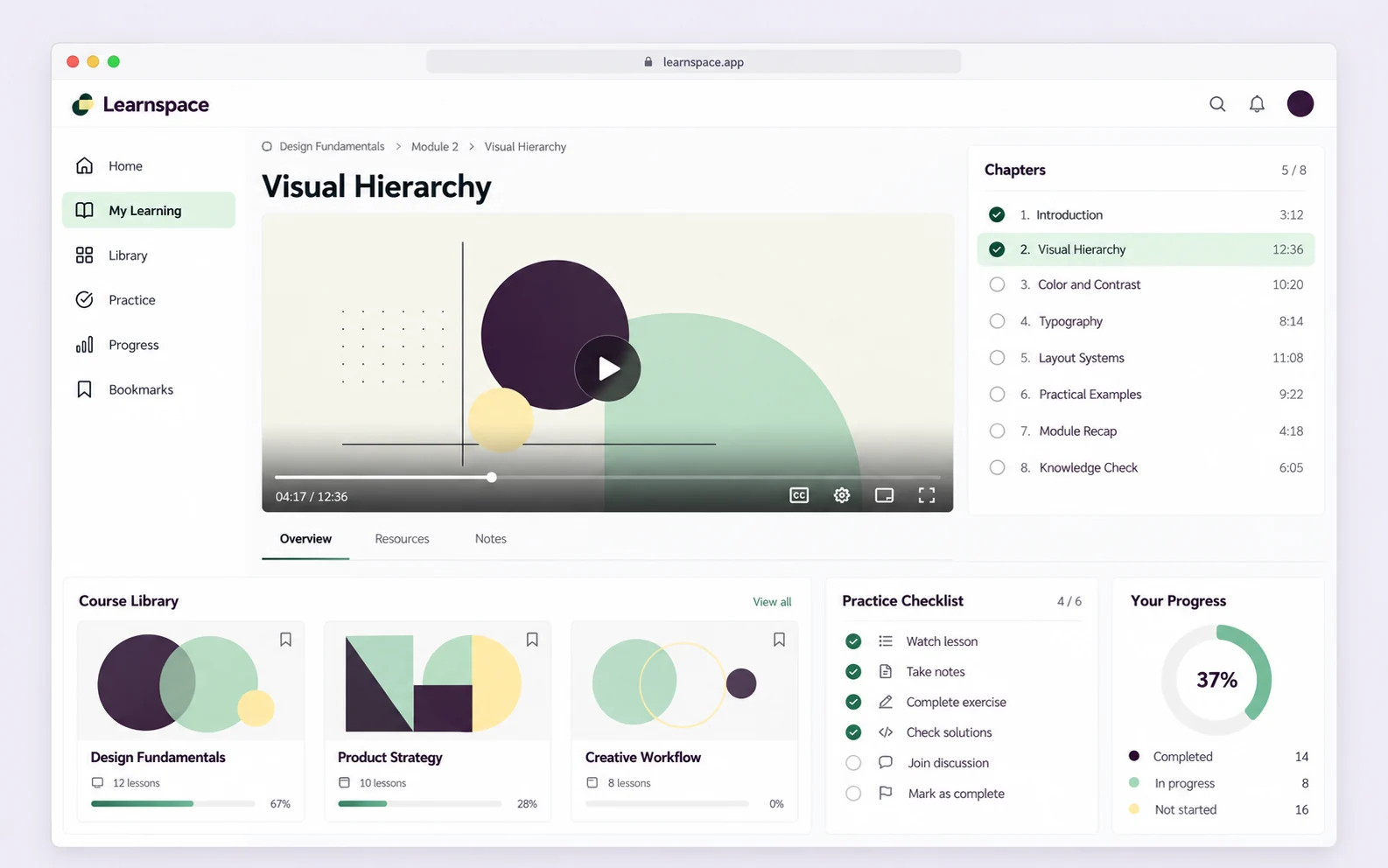
Learnspace studies a learning management platform where a course library, lesson workspace, and progress view share a clear structure. Mint, white, plum, and small yellow accents create a distinct product language. The concept focuses on navigating learning material and recording participation without claiming measured learning outcomes.
Learners following a course and content teams organizing lessons, resources, and participation.
A learner can finish watching a video without understanding what comes next or which task completes a lesson. Learnspace connects the course sequence, lesson resources, and practice checklist so progress has a useful meaning. The design also considers the editing responsibilities behind the content.
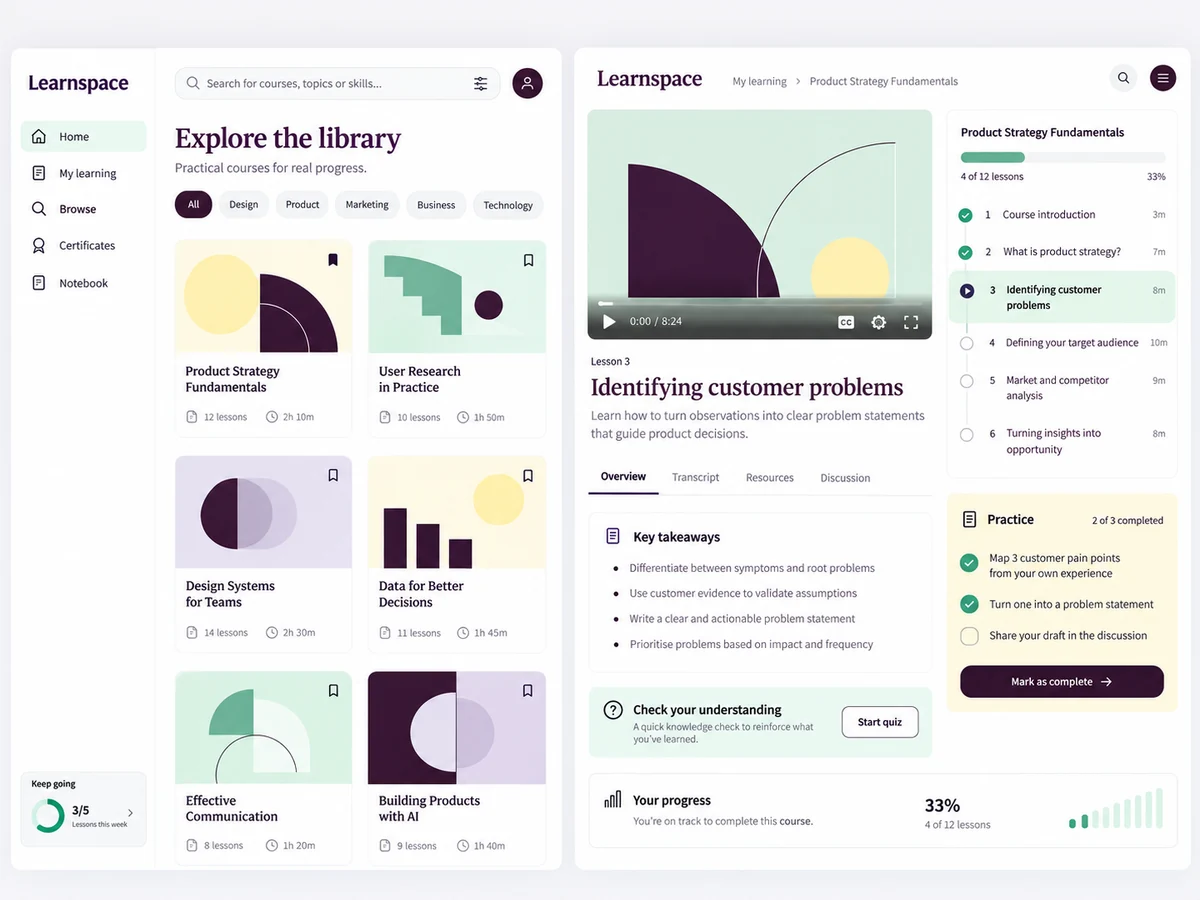
Course cards use concise titles, level or topic context, and a consistent entry point. The layout supports comparison without depending on human portrait thumbnails or overloaded badges.
The lesson view combines the current material, chapter navigation, and related resources. A practice checklist explains which task supports completion and where feedback would appear.
The progress view distinguishes recorded activity from the requirements for a course or lesson. The proposed rules would be agreed with the content team rather than inferred from time spent on a page.
The learner reviews course context and enters a clear sequence of lessons.
Material, resources, and practice tasks remain connected, with an understandable next step.
The user checks the meaning of recorded progress and returns to the next relevant lesson or incomplete activity.
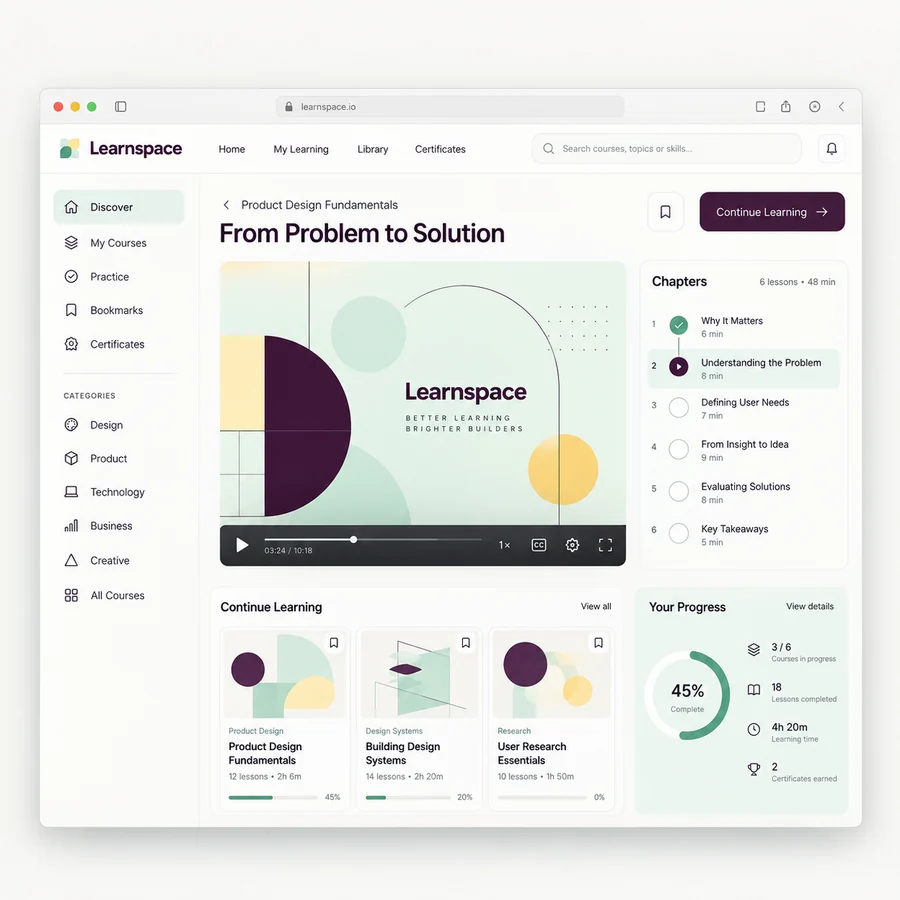
A proposed platform would define courses, lessons, resources, membership, and participation records.
Video delivery should load media on demand and keep content metadata separate from large files.
Accessibility, captions where supplied, content editing, and role permissions would form part of the delivery scope.
This study establishes a reviewable design direction. A production project would test the selected journey with representative users, realistic data, and agreed acceptance criteria. These questions define the next review without implying results have already been measured.
Share your audience, the task you want to improve, and the constraints that matter. We can discuss a scope built around your own context.
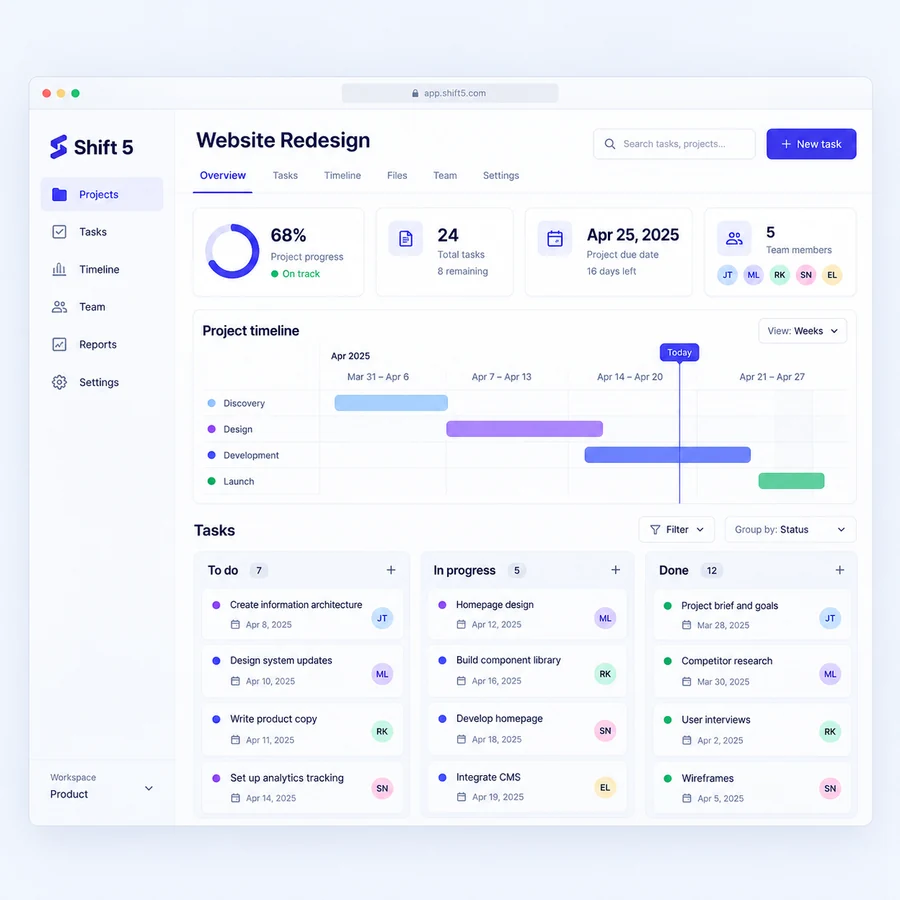
A project management design study connecting tasks, timelines, and ownership in a focused SaaS workspace.
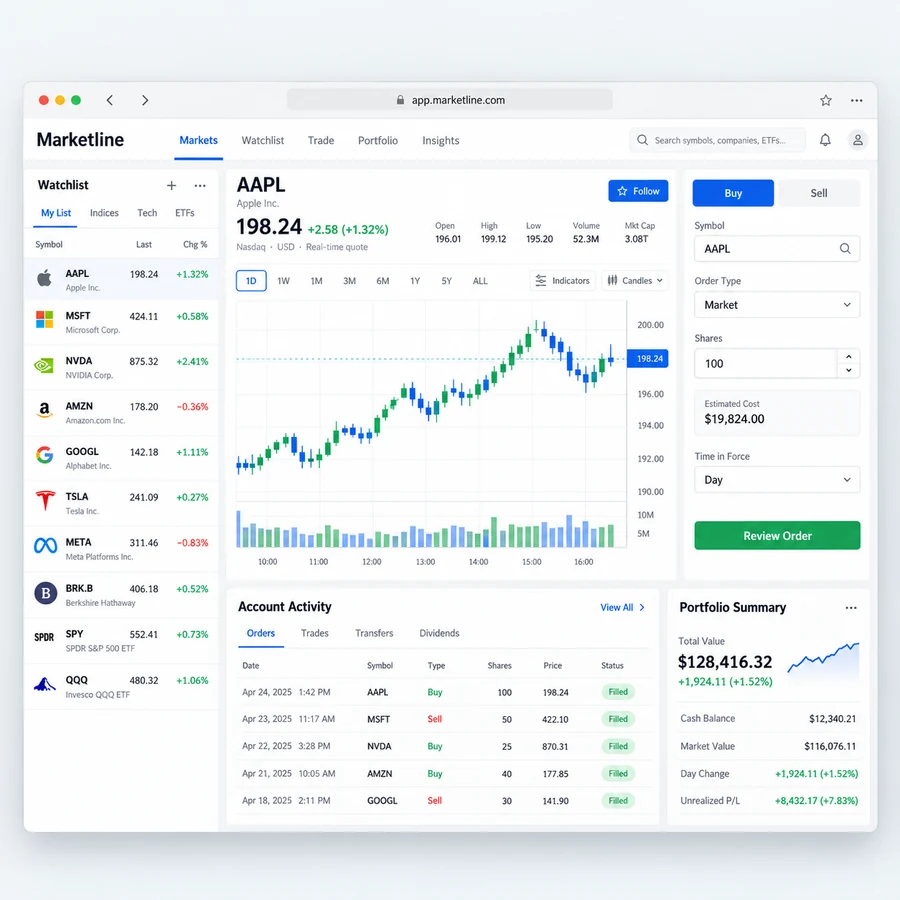
A market analytics interface study separating observed data, order review, and account activity.
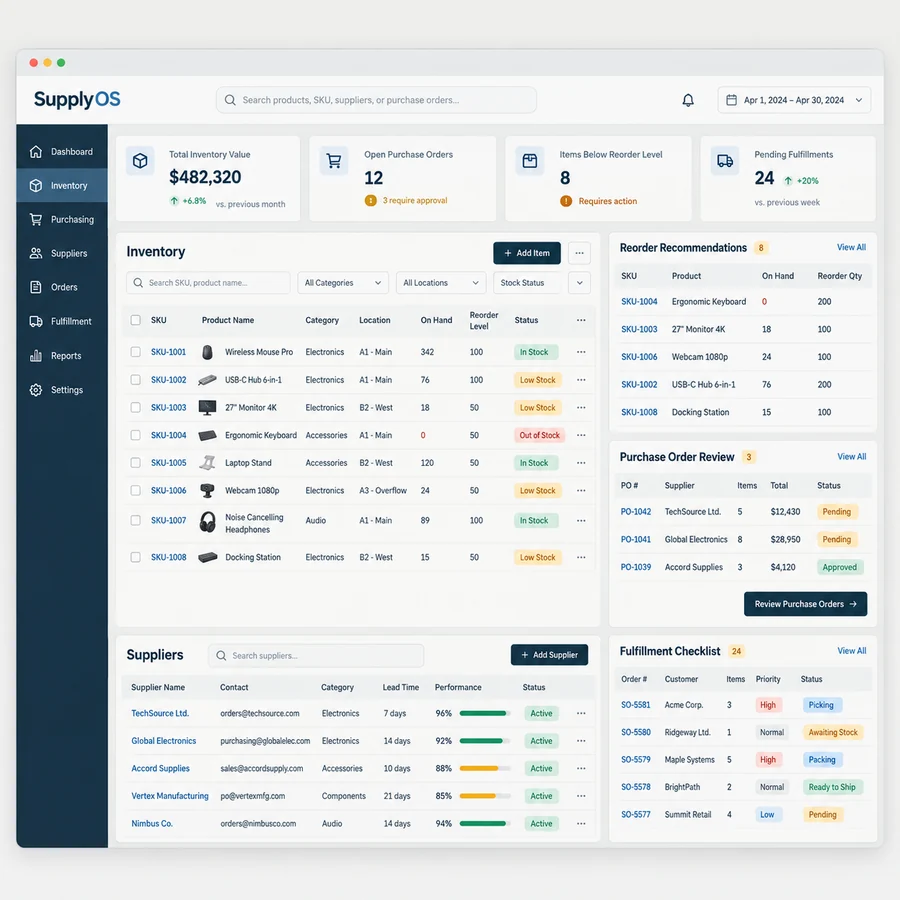
An ERP design concept connecting inventory, replenishment, purchase approvals, and receiving workflows.