
A map with operational context
The map and shipment list use the same selection state. A coordinator can inspect a stop and see its relevant record without losing the route context.


Know what needs attention next.
A logistics platform design concept connecting shipment status, assignment, delivery exceptions, and supporting records.
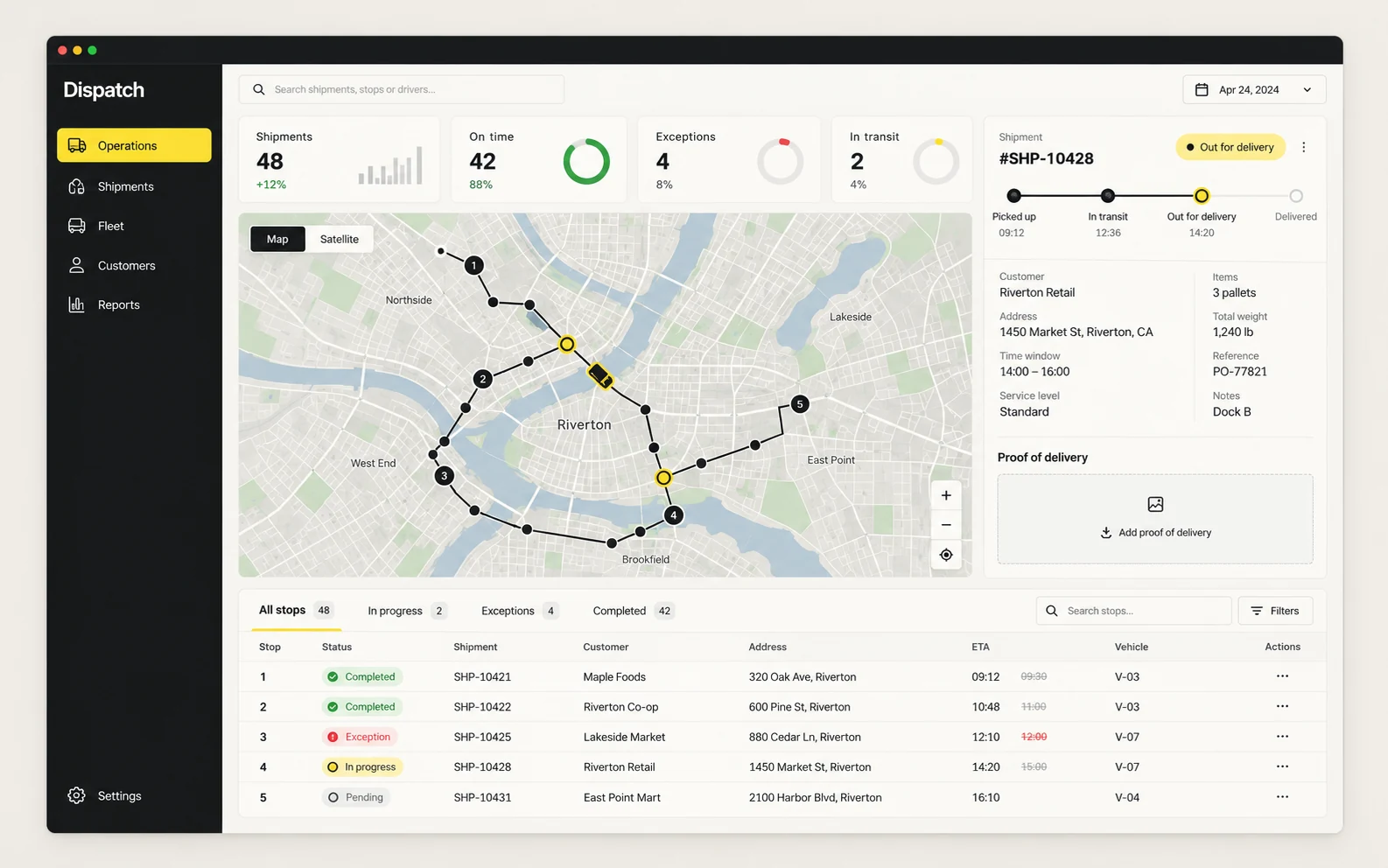
Dispatch explores a logistics operations workspace that connects delivery status with the record and person responsible for the next step. Off-white surfaces, slate map details, and restrained yellow accents support a practical product interface. The study uses illustrative routes and shipment records rather than claiming a live tracking service.
Dispatch coordinators, operations leads, and staff handling delivery exceptions.
A map can show movement while leaving a coordinator uncertain about a delay, an unassigned job, or the evidence behind a completed delivery. Dispatch studies an interface that connects the map to operational records and exception handling. It prioritizes actionable context over decorative real-time effects.
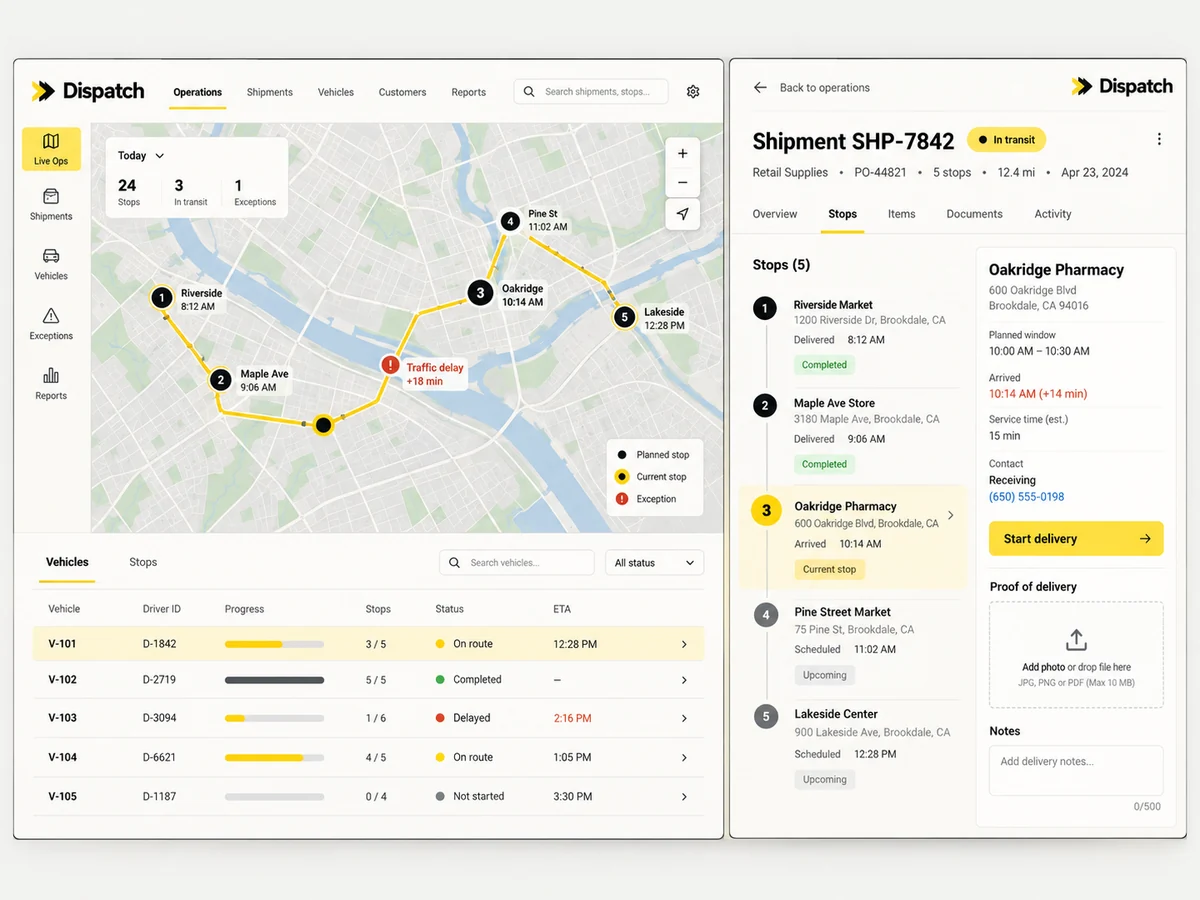
The map and shipment list use the same selection state. A coordinator can inspect a stop and see its relevant record without losing the route context.
An exception queue groups work that needs review and identifies its current owner. Assignment changes and unresolved dependencies have a visible place outside the main map.
The shipment detail screen retains the status history and supporting record references. A proposed implementation would distinguish reported delivery from the evidence required by the organization’s process.
The coordinator reviews the shipment list and exceptions, then selects a record with a clear reason for review.
The map, timing context, and supporting record help the coordinator assign a next action to the right person.
The resulting activity remains connected to the shipment and its supporting evidence instead of disappearing from the workspace.
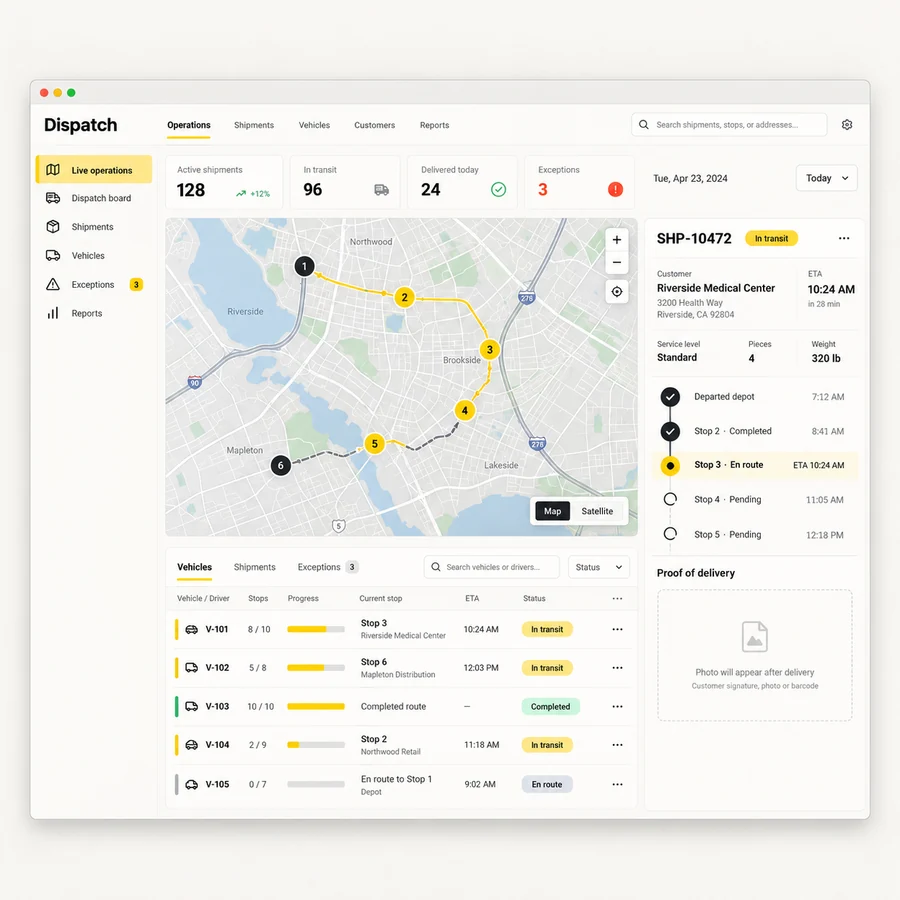
A production scope would define shipment, stop, assignment, event, and supporting-record models.
Location and external tracking information need explicit freshness, access, and failure rules.
Role permissions, offline updates if required, and integration reconciliation would be evaluated before implementation.
This study establishes a reviewable design direction. A production project would test the selected journey with representative users, realistic data, and agreed acceptance criteria. These questions define the next review without implying results have already been measured.
Share your audience, the task you want to improve, and the constraints that matter. We can discuss a scope built around your own context.
A project management design study connecting tasks, timelines, and ownership in a focused SaaS workspace.
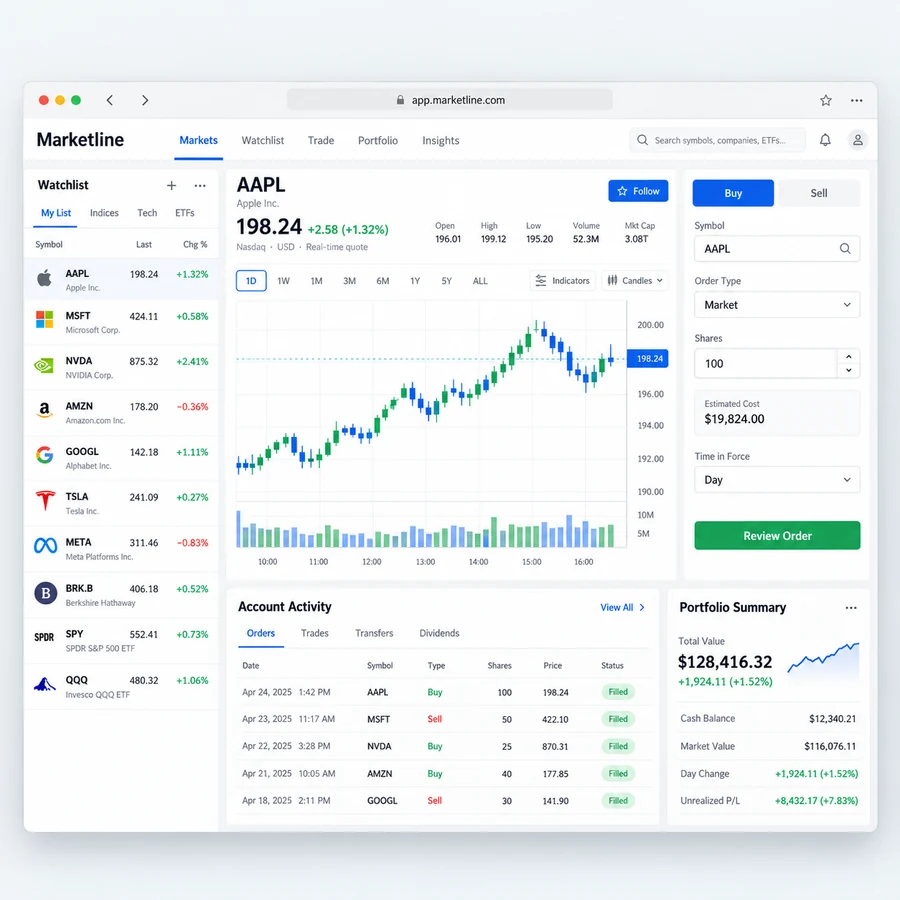
A market analytics interface study separating observed data, order review, and account activity.
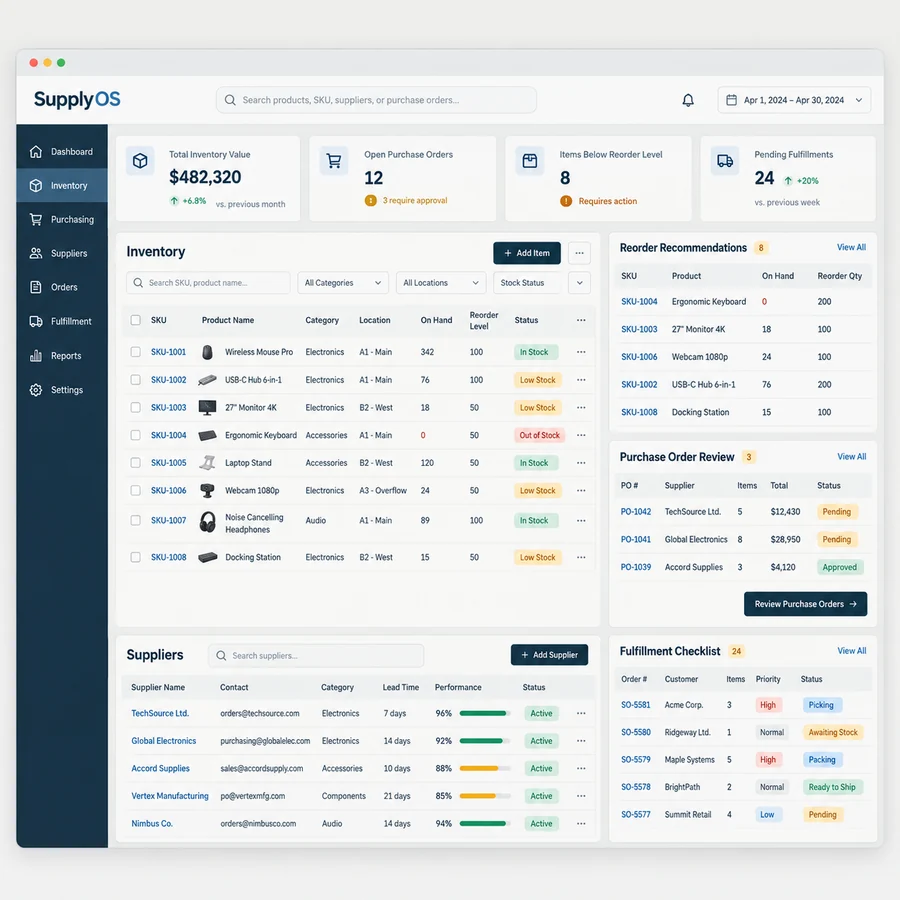
An ERP design concept connecting inventory, replenishment, purchase approvals, and receiving workflows.